By Pa Louis Sambou
During the same week in which the subject of reintroduction of the death penalty in the UK held mainstream media bandwidth hostage, for those in opposition to such ineffective penal measure, it must have been a breath of fresh air to learn of The Gambia NHRC’s publicationheaded: “Advisory note on the abolition of the death penalty in The Gambia”. This view is certainly consistent with the arguments advanced in making the case for abolition, but less so, for aspects of the publication which are so detached from the subject matter, I regret to say they give relevance to the phrase: ‘never judge a book by its cover’.
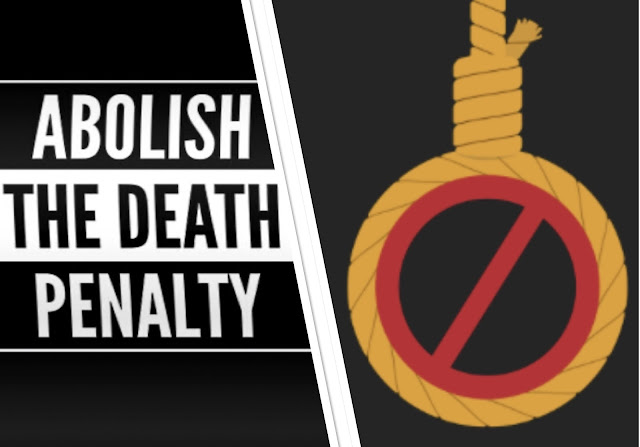
The death penalty, like a few other sticky areas of our legal order, is an adverse relic of colonialism which serves absolutely no useful purpose and for which there are much more effective alternatives. I cannot conceive of any situation in which State-sanctioned killing as a means of punishment would make society a better place; as a matter of fact, if we look around the world, the opposite is the case. Countries with the death penalty tend to have higher homicide rates – a recent study published by fullfact found that “taking average homicide rates of all countries with and without the death penalty, the difference is marginally greater, with 36.7 homicides per 100,000 amongst those with the penalty compared to 27.4 amongst those which abolished it.” In making the case for abolition of the death penalty in The Gambia, and nailing my collars to the mast in that regard, it would be mistaken if not irresponsible to do so without acknowledging those in opposition, of whom there are many. For this opposing constituency, I venture to emphasise that there is absolutely nothing certain about the death penalty other than its inability to safeguard against the execution of innocent people wrongfully convicted, and the irreversibility of its mistakes. So even if those opposed to abolition are not swayed by the numerous other arguments, the wrongful conviction argument is one which I would strongly urge them to give some solemn thought.
Effectively, the arguments advanced by the NHRC to substantiate the case for abolition of the death penalty in The Gambia, are well grounded in my view. So rather than nitpick, I would compliment the NHRC’s arguments in further advancing that, as a matter of fact and law (section 18(3) of the Constitution), the codification of the death penalty in the Constitution was conditional upon its retention being reviewed after 10 years. This mandatory review was due in 2007, but there is no existing evidence of such mandatory exercise having taken place, which means that such mandatory review is 16 years overdue. Therefore, it is reasonable to take the view that the legality of the death penalty as a legitimate penal measure, is at best, questionable.
On the question of the subject matter, as far as the diagnosis go, there is no doubt a convergence of thought and viewpoint with the NHRC. However, the same could not be said of their proposed solution as embodied in their conclusion and recommendations, about which it won’t be an exaggeration at all to state that most readers would find so far detached from, if not contradictory to the preceding arguments of the publication. Hence reintroduction of the draft Constitution is one of the NHRC’s proposed solution to abolition of the death penalty, it is perhaps helpful to revisit that aspect of the draft Constitution, being draft section 38 – Right to Life which states:
“1. A person shall not be deprived of life intentionally.
2. Without prejudice to any liability for a contravention of any other law with respect to the use of force in such cases as are mentioned in this subsection, a person shall not be regarded as having been deprived of his or her life in contravention of this section if he or she dies as a result of the use of force to such extent as is reasonably justifiable in the circumstances of the case, that is to say–
a. in compliance with an Act of the National Assembly;
b. for the defence of any person from unlawful violence or for the defence of property;
c. in order to effect a lawful arrest or to prevent the escape of a person lawfully detained;
d. for the purpose of suppressing a riot, an insurrection or a mutiny;
e. in order to prevent the commission by that person of a criminal offence; or
f. if he or she dies as a result of a lawful act of war.”
Subsection (1) is the prohibition. However, at subsection (2), the phrase: “Without prejudice to any liability for a contravention of any other law with respect to the use of force in such cases as are mentioned in this subsection…” instructs in explicit language that the prohibition of deprivation of one’s life by the State has exceptions i.e all the circumstances listed in the subsequent paragraphs (a) to (f) of the subsection.
As subsection (2) (a) of this draft provision permits the State to deprive a person of their life if doing so is “in compliance with an Act of the National Assembly”, clearly, a reintroduction of the draft Constitution is anything but the answer to abolition of the death penalty. Besides, this draft provision presents the same challenges as its equivalent in the existing Constitution. Furthermore, prohibition does not solely rely on there being a new Constitution, especially when the NHRC publication acknowledges that The Gambia has now ratified the second optional protocol of the International Convention on Civil and Political Rights, and the African Charter on Human and People’s Rights aiming to abolish the death penalty. Abolition can quite easily be achieved through a domestication of these international treaties for which there appears to be political consensus, rather than seeking to achieve the same through other means which are proven to be acrimonious and ineffective.
On the NHRC’s recommendation for section 18(1) of the Constitution to be repealed by the “Criminal Offences bill and the Criminal Procedure bill”, I cannot conceive of any mechanism through which primary legislation would legitimately supersede a codified Constitutional provision. On a more positive note, as a critical friend I think the NHRC’s publication helps to keep the subject matter alive, and serves as a gentle reminder to the government of the day, that the assignment is still work-in-progress rather than a foregone conclusion.
I must emphasise that a moratorium as is currently the case, seems a good start, but I would urge the Government to go further to at the very least also commute all pending death sentences to life imprisonment in the interim. More importantly, whilst the commitment to abolition of the death penalty is a welcome move, the time is nigh for this political assurance to evolve into a legal certainty.
About the Author
The author is regular columnist contributor to this medium.
Twitter handle: @That_Pragmatist
Publisher’s Note
Views expressed herein are those of the author and do not necessarily represent the views of the publisher. Want to be a contributing author? Please email opmail220@gmail.com







.jpeg)
.jpeg\")
.jpeg)
.jpeg\")