Gov’t urged to reconsider eviction notices “to over 950 property owners in Farato’
The Outpost is an online publication of news, opinion and civic education content on pertinent issues which are of importance, significance and public interest to The Gambia and her Citizens.
Team Outpost
Muhammed S. Bah President of the Gambia Press Union, (GPU) has urged the government of President of Adama Barrow through the Sheriff of the High Court to reconsider the eviction notices to over 950 landlords and property owners in Farato, requiring them to vacate their properties by June 13, 2024.
“I urge President Barrow and Minister Hamat Bah to intervene swiftly and ensure that the interests of the majority are protected,” he urged.
The court decision stated that the land belongs to the Alkalo of Bafuloto.
In his regular Facebook activism Muhammed S. Bah, said these homeowners, who legally purchased their land from Manor Properties, have built homes and invested their life savings into these properties.
The impending evictions, he said, threaten to render thousands of Gambians homeless, “creating a scenario ripe for conflict and instability.”
He added: “The government must act to mediate this dispute and find a solution that prevents mass homelessness and upholds the rule of law. It is imperative to address this issue with urgency to maintain peace and stability in our communities.” he concluded.
By Sheriff Saidykhan
The National Nutrition Agency (NANA) in collaboration with the Catholic Relief Service (CRS) has on Tuesday concluded five days capacity building Training of Trainers (ToT), on the use of Social and Behavioral Change Communication (SBCC) on Life Scale Food Fortification (LSFF) in Foni, Bwiam
The objective of the taining participants will develop the skills to apply Social and Behavioral Change Communication (SBCC), and the Inter Personell Communication (IPC) effectively in their work.
Serign Faye, veteran broadcaster one of the task force officers applauded the organisers for the training. saying they have facilitated a conducive learning environ for all the participants.
Antoine Mendy, of CRS thanked NANA for successfully conducting the training.
Aziz Ceesay, Director of SBCC at NANA expressed delight and extended gratitude to the partners for their unflinching support to NANA, geared towards improving the nutritional status of the country.
Mutarr Seckan, Cadet Certification Officer at the Gambia Bureau Standards said the training has equiped him to acquire requisite knowledge on the effectivee use of the SBCC materials.
“The training will enable me to have more understanding of SBCC approaches on Life Scale Food Fortification.
The facilitators have delve to the core of the training. Basically, I have lot of knowledge regarding the of the SBCC materials”.
Team Outpost
National Nutrition Agency (NANA) in partnership with the United States Conference of Catholic Bishop (CRS) has on Friday kick-off five days capacity building Training of Trainers (ToT) on Large Scale Food Fortification (LSFF) in Foni, Bwiam.
The training brought together nutritionists, stakeholders and experts to brainstorm on the need for the revival of food fortification in the country.
During the training participants will develop the skills to apply Social and Behavioral Change Communication (SBCC), and the Inter Personell Communication (IPC) effectively in their work.
Ousman Dem, Program Manager, Social and Behavioral Change Communication (SBCC) said the training is vital as it will equip participants on food fortification knowledge and skills.
Adama Jallow, of Point Newspaper said the training will enable him to acquire requisite knowledge on food fortification.
“I will be equiped with an additional knowledge for better improvement.” he said.
The training on the use of the Social and Behavioral Change Communication (SBCC) materials on large scale food fortification he said, would help in a long way.
“I expect to gain so much knowledge with vast understanding on the subject area as I am learning with great interest. I believe after the session, I would be in a better position to train others in the near future.” he concluded.
Team Outpost
Gambia Women are Free to Choose, (GWA-FC) a pro female circumcision advocacy group have reiterated its support of the Women\
Team Outpost
Madi MK Ceesay, national assembly member for Serrekunda West, and onetime victim of Jammeh era, has said that justice is inevitable and inescapable for criminals to hide.
In a telephone interview with this medium, Madi Ceesay expressed delight and extended gratitude to the Swiss Federal Court verdict on the 20 years jail term sentencing of Ousman Sonko.
“This goes to tell perpetrators that, days are gone now when you can trample on people\
By Alagie Saidy-Barrow
At the height of his powers, there were very few people in The Gambia with more influence and power than Ousman Sonko. Ousman Sonko and his interior ministry, along with the NIA now called SIS, were at the forefront of the APRC government’s abuse of Gambians. They killed and raped Gambians, and no one ever held them to account.
Ousman Sonko, like many with residual power from Yaya Jammeh, was untouchable. He was Yaya Jammeh’s eyes and ears. Ousman could do whatever he wanted in The Gambia and didn’t have to worry about anyone coming after him. Ousman Sonko never learned that power is transient. That power belongs to man but only temporarily. And many other Gambians, like Ousman Sonko, are yet to learn this bitter lesson. Once in power or close to those in power, we easily forget the transience of power. That is why you still hear worrisome phrases like “it is orders from the top.”
Ousman Sonko, like everyone who has ever been close to Yaya Jammeh, including Jammeh’s four comrades with whom he seized power, to Saul Badgie and Tombong Jatta, would eventually fall out with Yaya Jammeh. Like so many Gambians, blinded by greed, an addiction to government positions, and reliant on marabouts, they all deceived themselves into thinking that they would forever remain in the good books of Jammeh. All who were close to Yaya Jammeh thought they would be an exception to his betrayal. Every single one of them was wrong. Some of those who were once the darlings of Jammeh paid with their lives, we saw others spend time in Mile Two, while others such as Ousman Sonko, escaped into exile. Many Gambians are yet to learn that what matters most to African leaders is power over the people, and not the people themselves! The ones close to Jammeh never learned that they only mattered insofar as they were useful to Jammeh’s stay in power. There never was any loyalty.
When Ousman ran away to Europe, he never learned that globalization makes the world smaller. Like Ousman, many have their visas ready so they too can run away when the power they rely upon today can no longer guarantee their security tomorrow. Like other Gambians hiding in Europe, Ousman thought he could hide behind time. Many of us are yet to learn the bitter lesson that time is no one’s friend and no one can hide behind time forever.
Ousman Sonko’s case should be a lesson for all of us, but more so for those in power today. I’m referring to those with the power to decide the fate of ordinary Gambians. Be you a minister of interior or a security official of any sort. To them, I say, always remember that the power you have today does not belong to you. One fine day, that power will be taken from you. And if you have used that power to abuse people or to steal from the people, your day of reckoning will come someday. To those in power, I say, Yaya Jammeh’s suffering and misery in Equatorial Guinea should be a lesson for you. Just as Yaya never foresaw his downfall or that he would be living all alone in a faraway foreign country, you too may accumulate a lot but when your day of reckoning comes, like Yaya, none of the wealth you stole will be able to save you.
If you are a minister with power and you use that power to abuse people, Ousman Sonko’s predicament should be a lesson for you. The houses you buy in Dakar will feel too hot for you. If you are a frontline security officer and you allow some senior officer or politician to use you to violate and abuse the people, one fine day, you will be left to face the music and whoever gave you the orders to abuse will not be standing there to defend you. Ask the Junglers and all those who mindlessly carried out executive orders or directives.
To the security personnel, you are under no obligation to obey orders from anyone to abuse citizens. If you abuse Gambians, those with power will protect you from accountability today, but once they are no longer in power, you will face the consequences of your actions. Where is Yaya Jammeh to protect Ousman Sonko today? Where is Yaya to protect Yankuba Badgie? Where is Yaya to protect his financial and military Junglers? Where is he to protect his NIA/SIS agents like Alagie Morr? To the security officers, I say, be smart enough to know that not every directive must be obeyed and not every order must be obeyed. The lessons are here for us all to see.
I am not an advocate of Westerners holding Africans accountable for anything. That is why you will not see me celebrating this conviction of Ousman Sonko. But if African leaders refuse to hold perpetrators accountable because it is not politically advantageous to them, I guess it makes it easier for me to swallow Western countries holding the Ousman Sonkos accountable. Do you think Ousman Sonko would have been held accountable if he was living in The Gambia? I doubt it. He probably would have been made minister or nominated to parliament like some of his APRC colleagues! Lessons galore but sadly, no students to learn them.
About the Author
The author is a social and political commentator
Publisher’s Note
Views expressed herein are those of the author and do not necessarily represent the views of the publisher. Want to be a contributing author? Please email opmail220@gmail.com
GPU Welcomes Sentencing of Ousman Sonko Over Torture of Journalists
(Banjul, 15 May, 2024) - The Gambia Press Union (GPU) welcomes today’s verdict and sentencing of former Interior Minister Ousman Sonko in Switzerland to a 20-year prison term for crimes against humanity.
The Swiss Federal Criminal Court in Bellinzona found Sonko guilty of multiple counts of “intentional homicide, torture and false imprisonment, as well as crimes against humanity”, on Wednesday.
Sonko, who earlier denied the charges, was sentenced to a 20-year jail term (minus approximately 7 years already served in custody). He will also be expelled from Switzerland.
The Court found Ousman Sonko guilty of the killing of a perceived political opponent in 2000; of torture and illegal detention in connection with a coup plot in March 2006; of the killing of a politician in 2011 and of deprivations of liberty as well as acts of torture - including one killing - of peaceful demonstrators in 2016.
He has been ordered to pay compensation to the plaintiffs according to the prejudices suffered.
“During Sonko’s tenure as minister, some of the worst crimes were committed against journalists, including the torture of former journalist Madi Ceesay, and Musa Saidykhan - both working for The Independent Newspaper back in 2006 - over the paper’s reporting of a coup attempt,” GPU Secretary General, Modou S. Joof, said. “Today’s verdict, strongly reflects our wishes and aspirations for justice for dictatorship-era crimes committed against Gambian journalists, and all other victims of grave human rights violations.”
Sonko’s conviction and sentencing comes almost six months after Bai Lowe, a former death squad member under ex-dictator Yahya Jammeh, was sentenced to life imprisonment for his role in the murder of journalist Deyda Hydara.
The Higher Regional Court of Celle, a northern town in Germany, found Lowe guilty on all charges of crimes against humanity on Nov., 30, 2023, and sentenced him to life imprisonment for the assassination of Deyda Hydara in 2004, the murder of a former soldier in 2006, and the attempted assassination of a lawyer.
“These universal jurisdiction cases that have now been concluded in Germany and Switzerland and expected to begin in the USA with the trial of a former death squad member, Michael Sang Correa, have brought a lot of hope for justice for victims of crimes against humanity,” GPU President, Muhammed S. Bah, said.
“With steps being taken to establish a tribunal to try Jammeh-era crimes locally, we urge the Gambia government to expedite the process of seeking justice for journalists and all other victims of gross human rights violations suffered during Jammeh’s 22-year dictatorship.”
Demba Ali Jawo, who was President of the Gambia Press Union when Ceesay and Saidykhan were arrested and tortured, said: \"Indeed, most Gambians, particularly victims of the Yahya Jammeh regime, have welcomed the verdict of the Swiss court, sentencing former Interior Minister Ousman Sonko to 20 years imprisonment.”
“We hope this would serve as a lesson to both serving and future public officials that justice would be served to those who violate the rights of the people, no matter how long it may take,” said Jawo, who is currently the Chairman of the National Centre for Victims of Human Rights Violations. “However, some people wish that he should be repatriated to The Gambia to serve his sentence in the same harsh prison conditions that their victims had endured here.\"
Editorial
The life mantra of yesteryear generation was/is the ability to listen to one another for the self-actualization of one\
Team Outpost
Following the announcement by President Adama Barrow at the beginning of this year to bring back the 2020 Draft constitution, the Coalition of Progressive Gambians, (COPG) have recently engaged the government through the Ministry of Justice to bring back the 2020 Draft Constitution in its original form.
“This implies that the entrenched clauses provided in the constitution must not be amended or changed in anyway. It must be noted that these entrenched clauses provide for the realization of the independent function of the institutions that qualify good governance and those entrusted with the responsibilities of executing the functions of those institutions as defined by law. The institutions as the Independent Electoral Commission, The Auditor General\
By Alagie Saidy-Barrow
A long time ago, some Gambians in Atlanta came up with the idea of celebrating America’s independence on July 4th. Gambians from all over the United States converged in Atlanta for a few days of merriment. It used to be one of the biggest Gambian events in America, if not the biggest. For most attendees, the highlight of the July 4th celebrations was the evening football matches that had Gambians from various states competing for bragging rights. The evening at the park was also when some Gambians came to showcase themselves. It was their moment to impress other Gambians. To show how well they were doing. Some Gambians start planning for July 4th celebrations months before the event.
I know of a fellow who was said to have rented a very expensive car and drove it down from another state to Atlanta. He had the car parked close to the main entrance of the park with dancehall music blasting! He was hanging out with a few of his friends seemingly disinterested in our admiration of his expensive car. That fellow definitely made an impression. Eventually, one of the friends he was hanging out with told someone that the fellow rented the car. It was not his car. Years later, I’d come to meet this guy, and out of curiosity, I asked him if that was his car because others were saying he rented it. He laughed out loud and insisted it was his car and that those who were saying he rented it were haters! When I insisted, he laughed again and told me a lot of Gambians rented cars to come to the July 4th event. That was beside the point but I let it be.
I don’t know why but when I heard about all the vehicles our government officials decided to rent or buy in order to impress the OIC guests, I couldn’t help but think about that fellow and the expensive car he brought to impress at the July 4th celebration in Atlanta. Interestingly, just as he labeled those who said he rented the car haters, our government officials and those who benefited from this OIC also try to label critics as unpatriotic. Somehow, if you don’t express support for the OIC or promote it in a way they desire, it means you are not patriotic. Or as our government officials conclude, it means you are jealous. A very simpleminded conclusion.
Anyway, The OIC is over and done with. The expensive cars will find new owners. NAWEC will continue with its inefficiency. Some people will laugh all the way to the bank because the OIC buttered their bread. The average Gambian will see little to no benefit. And as usual, those Gambians who benefited in some form will hail it as a success. But ask them what barometer or yardstick they use to define success and chances are you’ll be met with blank stares. Or as someone maintained, the fact that Gambia successfully hosted the Conference is itself a success. I’m not sure that makes any sense to me but if your yardstick is that Gambia hosted the OIC, then I guess you can congratulate one another. As low a bar as that may be.
I must admit, I haven’t watched or listened to a second of the Conference. I read stories about it and saw pictures of attendees in colorful attires here and there. Given all that was promised at its inception and what I saw on my visit to The Gambia last December, I suspected the project would be mired in mediocrity and eat all you can.
If this was our opportunity to impress the world, I guess we accomplished that task. Which direction the impression scales tilt depends on whether those looking at it are close to power or among those who chopped some money. Objectivity often flies out the window when a Gambian is benefitting from any enterprise. But until they can show you tangible results, just know that we are all entitled to our flowery opinions.
I would have been proud if what we used to try and impress the world came from our own pockets. Knowing that we had to go and beg others to impress the world, I honestly don’t know what I’m supposed to be proud of. Am I supposed to be proud that Gambia can organize a huge conference on donated resources? Or is it that like the fellow in Atlanta, we should be proud that we bought or rented some very expensive vehicles to impress others while the majority of our people are suffering and living in poverty? If others hadn’t given us loans or donated money to Gambia, would we have been able to host the OIC? Please do not tell me other countries did it the same way. Begging and borrowing to impress others should never be normalized among any serious people!
About the Author
The author is a social and political commentator
Publisher’s Note
Views expressed herein are those of the author and do not necessarily represent the views of the publisher. Want to be a contributing author? Please email opmail220@gmail.com
Editorial
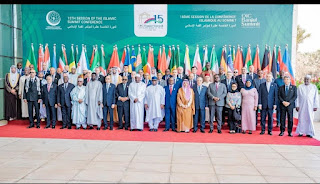
Emotions are wrapped up during and after the just concluded two days summit, of the Organisation Of Islamic Conference Summit (OIC) in Gambia.
A country whose people are expected to participate actively during the build up of the event to make it successful, many were seen in their various funeral mode of distress, due to the poor planning of the summit.
Top on the agenda of discourse of the summit, was the Hamas - Gaza conflict, which bears little or no significance to the general masses.
The OIC was/is greeted with mix emotions in the country, whose people are still battling with many crisis; chief among which is the cost of living crisis. It was alleged that corruption malfeasance was rampant leading up to the OIC summit.
A man is a needing animal, and the basic need is as physiological - food sufficiency, development and security. It is a widely held conviction that, a starving man will forgo his need for self-interest in order to get food.
An adage says ‘when you are on the breadline, bread is important’. The Barrow administration is under butt of immense pressure of criticisms, of the government\
By Sheriff Saidykhan
Modou Joof, the Secretary General of the Gambia Press Union (GPU) said the Union is still concerned about the safety and security of Journalists in the country.
He made these remarks on Friday, during the celebration of World Press Freedom Day at Sunset Beach Hotel, Kololi with the theme “A Press for the Planet: Journalism in the Face of the Environmental Crisis”.
World Press Freedom Day is set aside to reflect on issues of press freedom and the recognition of the important role of a free and independent press, and to amplify the voices of the voiceless.
State of Press Freedom & Freedom of Expression in The Gambia
Modou Joof said there have been an increase in media proliferation, allowing people to enjoy the luxury of watching different media channels and to share divergent views on the administrative life of the country.
“We have seen an increase in the number of private radio stations by almost 75%, with 39 FM stations in operations as of 2021, according to data from the Public Utilities Regulatory Authority (PURA), which is responsible for registration of broadcast media.
Gambians now enjoy the luxury of watching multiple local television channels, with five private television stations in operations, in addition to the national television which was the only TV station until 2017 when television broadcasting services was liberalised.
There are nine community radio stations, and a growing number of online platforms, at least twenty, however, there has been a drop in newspaper publications, with only five regularly publishing a print version.
Nonetheless, the increase in radio and TV stations means that more people now have access to the media to express their opinions on issues concerning their lives and livelihoods, and on issues of government and governance,” he said.
He said in 2023, the country registered significant progress in the Global Press Freedom Index with The Gambia ranked 5th in Africa and 46th in the world among 180 countries. He said this year, the country has dropped sharply in the Global Press Freedom Index.
He continued: “This year, the country dropped to 58th position globally (-12) and 10th in Africa (-5) in the global press freedom index. While this is still better that what obtains in a number of countries, the reason for the drop hinges on attacks on journalists, bad media laws, economic challenges, a lack of political will to ensure safety of journalists, and a lack of implementation of the Access to Information law,” he argued.
Attacks on Press Freedom & Freedom of Expression
He said the country is still grappling with challenges of press freedom - from physical attacks on journalists to impunity and a lack of justice for dictatorship-era crimes against journalists.
“We have witnessed in recent months direct threats to journalists and media houses from the current administration, which ignited calls on social media for attacks on individual journalists and media houses by political party militants affiliated with the ruling party. Journalists and media workers and human rights defenders have also faced arbitrary arrests by the police, detained incommunicado without access to family or lawyers with whereabouts unknown and in one instance physically assaulted while in custody, and released with or without charges. Incidences of physical assault on journalists and media professionals perpetrated either by the police or political party militants which occurred since 2017 have never been investigated, and no one is held accountable,” he said
He added: “The Gambia also has an access to information law which is crucial to the media’s role in promoting accountability, people’s right to information, freedom of expression and political participation. The government has initiated processes to operationalise the law, although very slow, with the development of policies and capacity building. However, a lack of a clear direction in the form of a good framework is hindering much needed progress to set up all the structures and mechanisms needed to operationalise the Access to Information Act, 2021. While commissioners have been identified, an Information Commission has not been established, the digital infrastructure to facilitate in part, obligations on proactive disclosure aren’t available, and government institutions have no Access to information implementation plans.
As a result, the culture of hoarding public information which was entrenched during the dictatorship still continues.
Journalists, civil society, the private sector, students and members of the public still face challenges accessing public information,” he concluded
Team Outpost Media
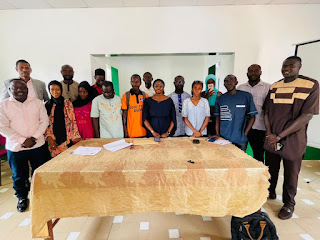
Shine Light In Girls’ Education in collaboration with the Association of Health Journalists (AOHJ) has on Monday trained journalists on Gender Based Violence (GBV) and Female Genital Mutilation (FGM/C).
The daylong capacity building training is aimed at empowering journalists through compassionate reporting, in the drive towards combatting Gender Based Violence and FGM/C across communities.
Speaking at the event, veteran broadcaster Serign Faye said journalists have a crucial role to report accurately on gender sensitive issues. He further urged the Ministry of Health to work closely in tandem with Health Journalists to enhance reporting on gender based violence, and FGM/C.
“The mass media is not only limited to informing the masses, but to educate the society on gender sensitive issues. Journalists have a crucial role to inform, and not to cause alerm” he advised.
Modou Touray, of the Block TV, said the training was significant to journalists in their reporting, in the fight to combat gender based violence, and FGM/C.
Salifu Touray, from the Ministry of Health also spoke on the significance of the training, adding that he will impart the knowledge gain to the society.
“The training on GBV was educative and I have learned a lot from the facilitators particularly on FGM/C. I thank Shine light and (AoHJ) for given me the opportunity to attend this training and will equally share with others the knowledge gain from the training,” he said.